Qingming Festival – April 4-6 (Gregorian Calendar)
Qingming Festival
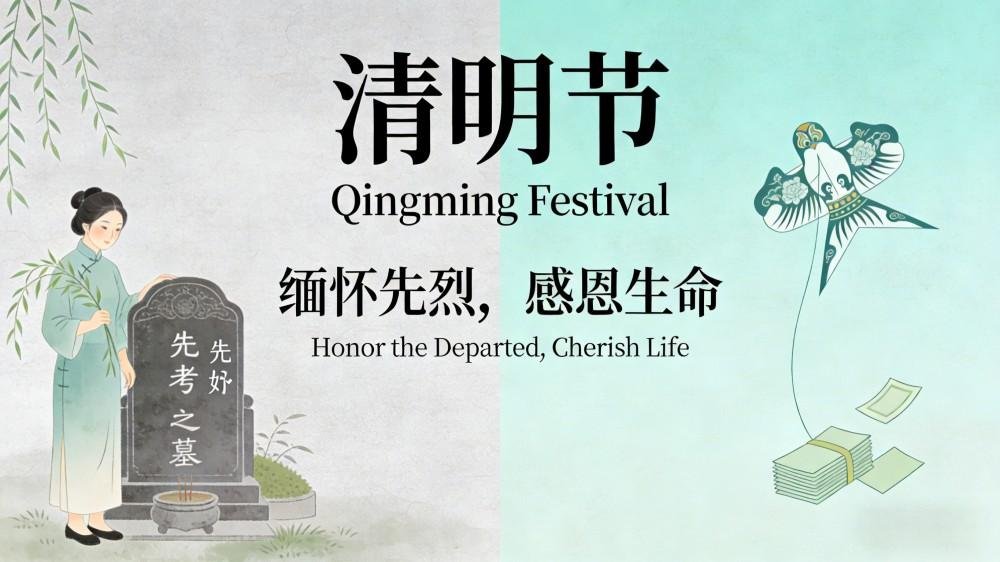
Okay, let’s get real for a second—this one is a little more serious than the others, but it still has a fun, joyful side. Think of it as China’s Memorial Day, but with more nature, more hiking, and way more green food. Qingming literally means “Clear and Bright,” and it falls right when spring is in full bloom—flowers are blooming, the grass is green, the weather is warm, and it’s the perfect time to get outside. The main purpose of Qingming is to honor our ancestors: we visit their graves to clean them (sweep away leaves and dirt), bring them offerings (usually home-cooked food, fruit, or tea—no, not candy or toys, our ancestors prefer real meals), and burn joss paper (paper money or paper versions of things like cars, houses, or clothes) to “send” them good things in the afterlife. It’s a quiet, respectful time to remember our family members who have passed away, but it’s not all sad—after the quiet part, we go “spring hiking” (taqing), because Qingming is also a celebration of new life and the start of spring. It’s like combining a moment of remembrance with a picnic in the park—balance is key! Now, let’s dive into the origin of Qingming, because this holiday has a history that’s both somber and beautiful. Qingming dates back over 2,500 years, to the Spring and Autumn Period. It started as a festival called “Cold Food Festival,” which was held to honor a loyal minister named Jie Zitui. Jie Zitui was a minister to Duke Wen of Jin, and during a time of exile, he even cut off a piece of his own flesh to feed the duke (gross, I know, but that’s loyalty for you). When the duke became king, he forgot about Jie Zitui, who then retreated to the mountains with his mother. The duke felt guilty, so he went to the mountains to find Jie Zitui, but he couldn’t find him. In a fit of desperation, he ordered his men to set fire to the mountains, hoping to smoke Jie Zitui out. But the fire burned for three days, and Jie Zitui and his mother were found dead, hugging a willow tree. The duke was devastated, and he ordered that no fires be lit on that day—people could only eat cold food (hence the name “Cold Food Festival”). Over time, the Cold Food Festival merged with Qingming, and the tradition of honoring ancestors and eating cold food continued. Today, we don’t eat only cold food anymore (thank goodness—cold rice is not fun), but we still honor our ancestors and celebrate the arrival of spring. To put it in American terms, Qingming is like if Memorial Day and Earth Day had a baby: we remember those who have passed away (like Memorial Day) and celebrate the beauty of nature (like Earth Day). It’s a day of balance—sadness and joy, remembrance and celebration. Unlike Memorial Day, which is more about parades and honoring soldiers, Qingming is more personal—it’s about remembering your own family members, not just strangers. It’s a time to visit your grandma’s grave, tell her about your life, and bring her favorite food (my grandma loved dumplings, so we always bring dumplings for her). It’s a way to keep the memory of our loved ones alive, and to feel connected to them even after they’re gone. And then, after the quiet remembrance, we go hiking, pick flowers, and enjoy the spring weather—it’s a reminder that life goes on, and that there’s beauty in new beginnings. It’s a beautiful holiday, and it’s one that teaches us to appreciate both the past and the present.
Key traditions: First, the respectful part: sweeping ancestors’ graves (called sao mu)—we bring a broom, wipe down the tombstone, and place fresh flowers (chrysanthemums are popular) or wreaths. We also talk to our ancestors, telling them about our lives and asking for their blessings (it’s like a one-sided phone call, but it feels good). Imagine sitting at your grandma’s grave, telling her about your new job, your new pet, or how well your kids are doing—it’s a way to feel close to her, even if she’s not here anymore. We also bring offerings: home-cooked food (dumplings, rice, vegetables), fruit (apples, oranges, bananas), and tea or wine. The idea is that our ancestors can “enjoy” the food, and it’s a way to show them that we still care. We never bring candy or junk food—our ancestors deserve better than that (sorry, Halloween candy). Some families even burn joss paper (also called “ghost money”), which is paper shaped like money, cars, houses, or even iPhones (yes, modern times call for modern offerings). The belief is that when you burn joss paper, it sends those things to your ancestors in the afterlife—so if you burn a paper iPhone, your grandma can “use” it in heaven (I like to think she’s texting us from up there). Burning joss paper is a little smoky, but it’s a tradition, and it’s a way to feel like we’re taking care of our ancestors even after they’re gone. Just be careful not to start a fire—we usually burn it in a metal bucket or a designated area. Then, the fun part: spring hiking (taqing)! We pack a picnic (usually snacks like Qingtuan, fruit, and water), put on comfortable shoes, and go for a walk in the mountains, parks, or countryside. It’s like a family outing, and it’s the perfect way to enjoy the spring weather. The grass is green, the flowers are blooming, the birds are singing—it’s impossible not to feel happy. We pick fresh greens (like shepherd’s purse or chrysanthemum leaves) to eat later—they’re fresh, healthy, and taste like spring. Picking greens is a fun activity for kids—they love running around, looking for different types of greens, and showing them off to their parents. It’s like a scavenger hunt for vegetables! Another fun tradition: flying kites! We fly all kinds of kites—big ones, small ones, ones shaped like birds or dragons—and some people even write their worries or bad luck on the kite string. Then, they cut the string and let the kite fly away, believing that it takes all the bad luck with it. It’s a cathartic, fun way to start the spring fresh. Imagine flying a kite high in the sky, cutting the string, and watching it float away—all your worries and stress go with it. It’s incredibly freeing, and it’s a tradition that both kids and adults love. Some people even fly kites at night, with lanterns attached to the string—they look like little stars flying in the sky, and it’s magical. We also plant trees during Qingming—since it’s spring, it’s the perfect time to plant new trees, and it’s a way to honor our ancestors by helping the environment. Planting a tree in memory of a loved one is a beautiful tradition, and it’s a way to leave a lasting legacy. Kids love planting trees—they get to dig in the dirt, water the tree, and watch it grow over the years. It’s a great way to teach them about nature and the importance of taking care of the earth. Another tradition: eating cold food (a leftover from the Cold Food Festival). While we don’t eat only cold food anymore, many families still eat some cold dishes, like cold noodles or cold tofu. It’s a way to honor the original tradition, and it’s a nice change from the hot food we eat during the winter. Cold noodles are refreshing, and they’re perfect for a warm spring day. And let’s not forget the family photos—we take photos while hiking, with the beautiful spring scenery in the background, and we post them on social media. It’s a way to share our happiness with friends and family, and to remember the day. Qingming is a day of balance—respect for the past, joy for the present, and hope for the future. It’s a beautiful holiday, and it’s one that reminds us to cherish our family, our memories, and the beauty of nature.
Food you need to try: Qingtuan is the star food here—a green rice cake made with glutinous rice flour mixed with wormwood juice (don’t worry, it tastes way better than it sounds!). Wormwood is a fragrant herb that grows in spring, and it gives Qingtuan its bright green color and unique, earthy flavor. They’re filled with either sweet fillings (like red bean paste or sesame paste) or savory fillings (like pork and bamboo shoots). Qingtuan is sticky and chewy, and it’s only available around Qingming—so you have to try it fast before it’s gone! To put it in American terms, Qingtuan is like China’s version of a spring scone, but greener, chewier, and more flavorful. It’s the perfect snack to bring on your hike, and it’s a great way to taste the new season. Making Qingtuan is a family activity—we pick fresh wormwood from the countryside (or buy it from the market), wash it, boil it, and then blend it into a juice. We mix the wormwood juice with glutinous rice flour and sugar to make a dough, then fill it with our favorite filling. Kids love helping with this—they get to squish the dough, add the filling, and shape the Qingtuan into little balls. Even if they’re not perfect, they still taste good, and the fun is in the process. Sweet Qingtuan is the most popular—red bean paste is classic, and it’s sweet and creamy, which pairs perfectly with the earthy flavor of the wormwood. Sesame paste is another popular sweet filling—it’s nutty and sweet, and it adds a nice texture. Savory Qingtuan is great for people who don’t like sweet food—they’re filled with minced pork, bamboo shoots, and mushrooms, and they’re seasoned with soy sauce and spices. They’re savory and delicious, and they’re like a little snack that’s both filling and tasty. Pro tip: Eat Qingtuan warm—they’re chewier and more flavorful that way. If you eat them cold, they can be a little hard, so pop them in the microwave for a few seconds or steam them for a minute before eating. We also eat fresh spring greens stir-fried with garlic, which is simple but delicious, and it’s a way to taste the new season. Spring greens are fresh and tender, and stir-frying them with garlic brings out their flavor. We usually pick the greens ourselves while hiking, which makes them even more special. It’s like farm-to-table dining, but better because you picked the greens yourself. Some of the most popular greens to eat during Qingming are shepherd’s purse, chrysanthemum leaves, and spinach. Shepherd’s purse is a small green with a slightly bitter flavor, but it’s delicious when stir-fried with garlic. Chrysanthemum leaves are fragrant and slightly sweet, and they’re great in stir-fries or soups. Spinach is a classic, and it’s always fresh and tasty in spring. Another popular food during Qingming is cold noodles—they’re made with wheat noodles, tossed with sesame oil, soy sauce, vinegar, and chopped green onions. They’re refreshing and cool, which is perfect for a warm spring day. Cold noodles are a leftover from the Cold Food Festival, and they’re a way to honor the original tradition. We usually serve cold noodles with a side of stir-fried greens or a hard-boiled egg, which makes them a complete meal. We also eat a variety of fruits during Qingming—apples, oranges, bananas, and strawberries. Apples symbolize peace, oranges symbolize good luck, and strawberries are fresh and sweet, perfect for spring. We bring fruit to our ancestors’ graves as offerings, and we also eat it during our picnic. It’s a nice break from the savory and sweet snacks, and it’s healthy too. And let’s not forget the tea—we drink jasmine tea or green tea during Qingming, which is fresh and fragrant. Jasmine tea is sweet and floral, and it pairs perfectly with Qingtuan. Green tea is light and refreshing, and it’s a great way to stay hydrated while hiking. Tea is also brought as an offering to our ancestors, and it’s a way to show them respect. We also eat a snack called “sanzi,” which is a crispy fried dough stick. Sanzi is salty and crispy, and it’s perfect for snacking on while hiking. It’s a popular snack in northern China, and it’s often served with tea. Sanzi is easy to carry, so it’s a great addition to our picnic. Qingming food is all about fresh, seasonal ingredients—we eat what’s in season, which makes the food taste even better. It’s a way to connect with nature and to celebrate the arrival of spring. Whether you’re eating sweet Qingtuan, savory stir-fried greens, or refreshing cold noodles, you’re sure to taste the beauty of spring in every bite.