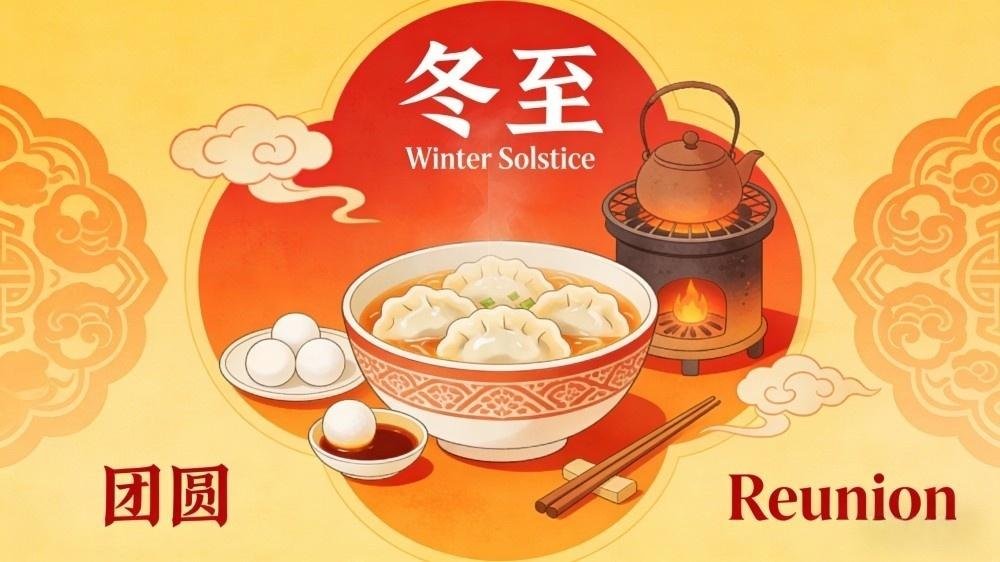
Winter Solstice (Dongzhi Festival) – December 21-23 (Gregorian Calendar)
Dongzhi Festival, This is the shortest day of the year (hello, long nights!) and the longest night—after this day, the days start getting longer, and the nights get shorter. In China, we have a saying: “Winter Solstice is as important as Spring Festival”—which means one thing: MORE FOOD. Seriously, this festival is all about eating warm, comforting food to get through the cold winter, and it’s a time to gather with family (surprise, surprise—we love our family gatherings!). The idea is that eating warm food on this day will “nourish” your body and help you stay healthy through the cold months ahead. It’s like China’s version of a cozy snow day meal—no stress, no big traditions, just good food, warm company, and staying inside away from the cold. It’s simple, but it’s full of warmth and love.
Key traditions: The main tradition is eating warm, hearty food—and the exact food depends on where you are in China (we have regional differences, just like how you eat turkey on Thanksgiving in the US, but some people eat ham). In northern China, we eat dumplings—lots and lots of dumplings. There’s a legend that a doctor named Zhang Zhongjing invented dumplings during the Han Dynasty to keep people warm in winter. He wrapped meat and herbs in dough, boiled them, and gave them to the poor, who then remained healthy. Eating dumplings on the Winter Solstice is a way to honor that tradition and stay warm. In southern China, we eat glutinous rice balls (tangyuan), similar to the Lantern Festival, but sometimes savory (filled with meat or vegetables) instead of sweet. In some parts of China, they eat hot pot—everyone sits around a pot of boiling broth, cooking meat, vegetables, and noodles—it’s warm, fun, and perfect for a cold night. Another simple tradition: taking a hot bath (to warm up) and wearing warm clothes—basically, doing everything you can to stay cozy. It’s a day to slow down, relax, and take care of yourself and your family.
Food you need to try: If you’re in the north, dumplings (again! But these are usually filled with pork and cabbage, or pork and leek—perfect for cold days). They’re boiled or pan-fried and served with vinegar or soy sauce. We usually make dumplings together as a family—everyone sits around the table, wrapping dumplings, chatting, and laughing (even if your dumplings look lopsided, they still taste good). If you’re in the south: glutinous rice balls (tangyuan)—sweet or savory, boiled in soup. Sweet tangyuan are filled with red bean paste or sesame paste, and savory ones are filled with pork or mushrooms. Either way, they’re warm, chewy, and comforting. If you’re anywhere in China: hot pot! It’s a communal meal—you can put whatever you want in the broth (beef, lamb, tofu, cabbage, noodles), and it’s perfect for sharing with family. Pro tip: Add some chili to the broth if you like it spicy—it will warm you up even more.
And that’s it! 8 Chinese traditional festivals, each with rich traditions, delicious food, and lots of heart—now with way more details and photos to bring them to life. The next time your Chinese friend mentions one of these, you’ll know exactly what they’re talking about—and maybe even ask to join in on the fun (we’ll save you a dumpling, mooncake, or zongzi, promise). These festivals aren’t just about traditions—they’re about family, love, luck, and enjoying the little things in life, which is something everyone can relate to, no matter where you’re from. OK finish